
Capitalicide: Exploring the hidden death toll of neoliberalism
capitalism | politics | democracy | inequality | poverty
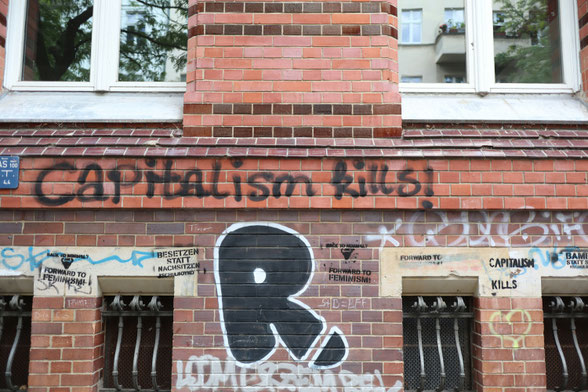
The Latin word "cide" means "killer" or "act of killing". There are many words that end with the suffix -cide:
Homicide - the killing of a person.
Femicide - the killing of a woman or girl because of their gender.
Genocide - the killing of a group of people based or religion, ethnicity, etc.
Suicide - the killing of oneself.
I have recently invented a new word, the same way that Raphael Lemkin invented the word Genocide in 1944. He eventually got the UN to adopt the Convention on the Prevention and Punishment of the Crime of Genocide in 1948, and I'm hoping my new word will have the same effect. The word I'm hoping will win next year's word of the year award is: Capitalicide.
Now, I'll admit that it doesn't roll off the tongue quite as easily as the others, but I think that it's an important step to take in acknowledging the number of people who have fallen victim to Capitalicide. The dictionary definition of my new word will be: the systematic killing of people by the structure and policies of capitalism. In particular, Free-Market Capitalism, or Neoliberalism, if you prefer. Friedrich Engels actually referred to capitalism as social murder in his 1845 book, The Condition of the Working Class in England:
The conditions under which the labouring classes live and work are a form of social murder.
The capitalist system knowingly subjects workers to conditions that lead to disease, injury and early death.
Since the late 70s, early 80s, when Margaret "The Iron Lady" Thatcher and Hollywood movie president, Ronald Reagan unleashed their murderous ideology of free-market capitalism upon the world, more than 5 million excess deaths have occurred each year according to various studies. Capitalism is the stealth killer. You're more likely to become one of its victims if you're poor, a person of colour, a woman, or if you live in the Global South.
Obviously, the easiest way to stay out of capitalism's murderous clutches, is to be born white, male, rich and preferably European. But that's not always a viable option. Deaths caused by capitalism cannot be called unfortunate. They're inherent to a system that prioritises profit over human life. How do you fall victim to Capitalicide? Through poverty, healthcare inequality, war, hunger and environmental destruction.
A new report by the World Inequality Lab argues that global inequality has become so extreme, urgent action is needed. Much like the climate crisis, I'm sure we can all imagine exactly what form that urgent action will take. The authors of the report argue that the current divide between the wealthy 1% and the bottom 50% is no longer sustainable for society or the ecosystem. If we want to live in fairer, democratic, economically resilient and ecologically viable societies, the time to act was yesterday.
The Golden Twenties
Let's rewind to the birth of modern capitalism. Back in the olden days - the early 1900s - the economies of the Western world were thriving. Like, really, really thriving. All that money from all those resources from all those lands they'd colonised had made some white men filthy rich.
Then, in 1914, an Austrian prince was assassinated in Sarajevo and World War 1 began. Germany and Austria thought they were tough enough to defeat the rest of the world, but they got their asses kicked. OK, it was a bit more complicated than that, but you get the gist. 20 years later, silly old Germany started another war, wanting to give world domination another try. Spoiler alert. They lost again.
About a decade before Germany's second unsuccessful attempt at world domination, Wall Street crashed, causing a global recession. Since the end of the First World War, the US had been lending the poor Europeans money, and now, with the US economy in free-fall, Uncle Sam came calling for repayment. The European banks failed, Germany's economy imploded and the most famous era of political extremism was ushered in.
This could have all been avoided if only the powers that be had listened to economist John Maynard Keynes. In 1919, just as the last drops of ink were drying on the Treaty of Versailles, Keynes predicted, with eery precision, exactly what the effect of the signed treaty would be. It's a bit like when you read The Handmaid's Tale today, and think "Oh shit, this is real life now!"
Here's a quick round-up of Keynes's key predictions:
- ECONOMIC COLLAPSE IN GERMANY - Germany was poor and simply didn't have the money to pay the reparations. According to the treaty, they would lose key industrial regions, causing a loss of export capacity. Plus, the payments were being demanded in a foreign currency that Germany had no reserves of.
- EUROPEAN-WIDE CRISIS - The knock-on effect of Germany not being able to pay their debts, was that the allies (England & France, mostly) wouldn't be able to pay their loans to the US. Cross-border trade would collapse and mass unemployment and starvation would follow.
- POLITICAL RADICALISATION - European populations would blame democracy for the failures, allowing extremists to step in and take their place. Another war would be likely within a generation.
The Economic Consequences of the Peace, 1919 | John Maynard Keynes
Basically, Keynes believed that by designing an economy that only produces misery, we shouldn't be surprised when the bodies and democracies pile up.
If we deliberately aim at the impoverishment of Central Europe, vengeance, I dare predict, will not limp.
Ten years after Keynes published his book warning of the consequences of the Treaty of Versailles, the Wall Street crash happened and all of his predictions came true. By 1933, the German Volk were busy raising their arms and chanting "Heil Hitler", while the Americans had elected a woke commie for president. Franklin D. Roosevelt introduced the New Deal, a revolutionary series of programs, reforms, and regulations designed to help the poor and unemployed, stimulate the economy, regulate the banks, modernise infrastructure and prevent future crises. Keynes later praised the New Deal, saying that it was exactly what he'd envisioned.
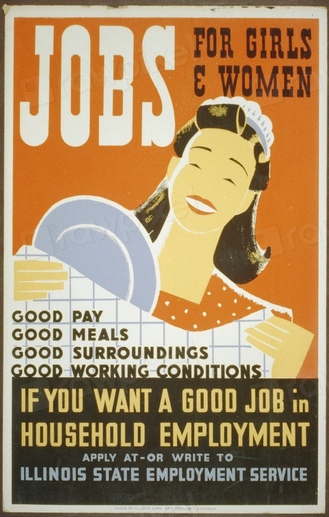
Because of Roosevelt's smart forward thinking, the US was able to help post-war Europe rebuild with the Marshall Plan. Of course, the US, even with such a leftie in power, never does anything out of altruism. The money the US gave European countries to rebuild their economies, was also meant to help stop the spread of Communism, which had become pretty popular after the world had defeated Fascism.
The Golden Age Of Capitalism
After World War 2, the global economy looked like a gym bro on steroids. To prevent a repeat of the financial chaos of the 1930s, the IMF and World Bank were created. They were set up to help stabilise economies and hand out loans. However, poorer nations were, more often than not, left with crippling debt instead. With US industrial power and the Bretton Woods system in place, trade boomed, the world became more interconnected and economies grew bigger than ever.
Across Europe, woke, socialist ideas spread like today's summer-time forest fires. Governments introduced (almost) free healthcare, state pensions and social security. This era of unprecedented growth, stability, and government-backed comfort is now lovingly referred to as the Golden Age of Capitalism. Or as the kids like to call it, the Boomer Generation.
Sadly, this golden age was not to last.
A NEW WORLD ORDER
In the sixties and seventies, while normal people were experimenting with LSD and protesting against the never-ending war in Vietnam, a new economic ideology was born. Known as the Chicago School, the star member of this gang was Milton Friedman. The recipient of the Nobel Prize for Economics in 1976, Friedman was the godfather of Free-Market Economics. He argued that markets were rational and governments were clumsy and that social protections were a waste of money. He sounds like a real stand up guy!
What Thatcher and Reagan did, like all good despots who have read one book and then make it their whole personality, was get rid of all those pesky regulations, sell off everything that belonged to the state (the people), restrict the role of unions, reduce welfare payments and social security safety nets, and, of course, cut tax rates for the wealthy. All because Mr Friedman promised that removing government intervention would sort the economy out.
Margaret Thatcher, with her degree in Chemistry, and Reagan with his history of terrible acting, found Friedman's theories modern and fresh, and immediately set about exporting this exciting new idea around the globe. Following on from the oil crisis in 1973, the piles of dollars that had been spent on the Vietnam War and the Iranian Revolution of 1979, economies had stagnated. Inflation was high and unemployment was equally as high. This didn't quite fit with the Keynesian methodology, and so Thatcher and Reagan decided to give this new-fangled Free-Market idea a try.
Average workers were told that the wealth would trickle down to them... eventually. Well, I don't know about you, but I'm still waiting for the trickle. The result was a new world order that was globalised, market-driven and unapologetically unequal. The good news for rich people was that profits soared, growth returned and inflation fell. The bad news for poor people was that they got poorer, had less job security and the economic risk was now placed squarely on their shoulders instead of on the state. What actually trickled down to us mere mortals was a huge pile of inequality, where the gap between the rich and poor got bigger and bigger and bigger until we arrived in 2026, where we now have actual billionaires (maybe even trillionaires) who pay less tax than I do. The wages of top earners grew by 160.3% from 1979-2019, while wages for working-class people decreased or stagnated.

Using trade, finance, and a little gentle persuasion, organisations like the IMF and World Bank helped push this ideology onto anyone who would listen and especially those who wouldn't. Countries were told to open their markets, shrink the state, and trust that growth would almost definitely, probably maybe, trickle down.
The contrast with the Golden Age of Capitalism is brutal. Back then, the state was there to cushion the shocks, unions were free to bargain for better rights, and social programs promised security. Growth was more inclusive, the middle classes expanded, and people could reasonably believe that they could get ahead. Suddenly, the safety net was gone, replaced by a polite suggestion that if we just adapted, just put our trust in the markets, then everything would be okay.
The legacy of this new world order permeates our lives today more than ever. We're constantly told there's no alternative. No way to counter what the markets create: extreme inequality, climate disaster, war, the fraying of the social contract. That our faith in the indifferent market forces will eventually iron out the problems. Capitalism is leaner and meaner than ever before. It marches forward, trampling over anyone who stands in its way, leaving Keynes, unions, and dreams of a stable job lying on the ground waiting for help to arrive.
A Great Leap Forward
While the west was busy embracing Friedman's free-market fundamentalism, East Asia - led by China - was pursuing a different path: State-Led Capitalism. In the fastest growing economy with the fastest growing middle class, many of the governments in East Asia were actively helping to shape economic policies. They retained control of key industries and directed investments towards national priorities. This led to rapid growth, reduced poverty and infrastructure development that we in the west could only dream of.
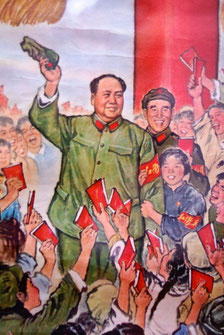
China's meteoric rise from an agrarian society to a global economic powerhouse in just four decades is testament to the power of state intervention. Unlike in the neoliberal playbook, many East Asian economies ensured that wealth circulated within the society rather than disappearing into offshore tax havens.
However, this model also comes with many problems. Authoritarian control, suppression of labour rights, environmental degradation (although the US and some other neoliberal economies currently face these exact same issues) are the real costs of China's rapid growth.
And while state-led capitalism can deliver real, tangible, material progress, it doesn't automatically come with democracy, equality or freedom as part of the package. It does force us to ask the critical question: If markets alone cannot deliver prosperity for all, what role can the state play in shaping our economic life? The East Asian example does prove that capitalism doesn't need to be synonymous with neoliberalism. Alternatives, however imperfect, do exist.
The Banality Of Capitalism
After Fascism was defeated in 1945 and Communism collapsed in 1991, Capitalism stepped up and took their place as the new global authoritarian regime. Authoritarian, I hear you cry. But capitalism is all about freedom! Anything to do with freedom is automatically good and right. Right?
No. Not right. I argue that neoliberalism is a threat to the dignity of the human person. The unregulated markets that highly regulate our lives are completely indifferent, which, in turn, makes us, the blind followers of capitalism, indifferent by complicity.
A recent example of this is the COVID-19 pandemic that began in 2019 and lasted approximately 3 years. It triggered the sharpest and deepest economic contraction since the invention of capitalism, and many neoliberal governments (the US and the UK especially), showed us through their complete incompetency and unwavering reliance on an indifferent market force, how expendable most of us were.
Here's how Capitalism compares with its authoritarian counterparts, Fascism and Communism:
- FREEDOM OF THE PRESS - In the US, 90% of the media is owned by just 6 corporations. The ruling classes get to decide what we see, hear and feel. When the media is owned and controlled by oligarchs, then these corporations can do all of the state's bidding - Goebbels would be so proud!
- FREEDOM OF SPEECH (or lack of) - The best example of this in recent history is the stifling of the Pro-Palestinian protestors across the globe. Anyone in a truly democratic society should have the right and the freedom to protest against injustice. If the ruling classes can suppress the protests of an ongoing, live-streamed genocide, then it will be even easier to suppress protests for smaller injustices.
- DEMOCRACY - THE ILLUSION OF CHOICE - Crushing unions, cutting welfare programs and allowing the rich to earn more profits at the expense of the people and the environment. Why is the assembly line of presidents/prime ministers/chancellors, etc, who largely serve the rich instead of the ordinary people, considered democratic in the first place? Are these candidates ever truly representative of the interests of the people, or are they simply selected by the ruling class?
None are more hopelessly enslaved than those who falsely believe they are free.
Johan Wolfgang Goethe, 1809, Elective Affinities
- INTRUSIVE GOVERNMENT - Capitalism and Imperialism are the very best of friends. Capitalism likes to bang on about the advantages of small government, but its intrusive nature rivals that of Stalin, Hitler and Mao. Right-wingers think that intrusive governments are left-wing and mostly Communist, while ignoring the military and secret services which are often bloated and given too much power in many cases. The idea of a big or a small government is absurd anyway. It shouldn't matter the size of the government, instead it should be all about who they serve.
If they tax the rich and use the revenue to pay for social programs:
this is valid.
If they tax the poor and use the revenue to pay for the imperial war machine:
this is not valid.
- THE CULT OF PERSONALITY - There are so many examples of this in recent years - Trump, Putin, Orbán, Milei (all white men - how interesting). We could write longs lists of all the terrible things these men have done, yet their supporters refuse to find fault with them.
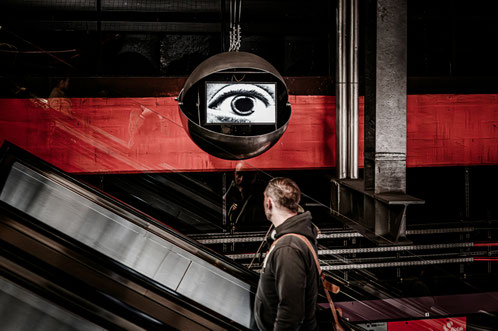
- THE SURVEILLANCE STATE - If George Orwell were alive today, he'd write "BIG BUSINESS IS WATCHING YOU". After the Berlin Wall fell and the Stasi were no more, the good guys (the west) took all of their ideas and used them to create the modern surveillance state: ads everywhere, cameras on every street corner, smart homes, smart watches, smart cities and the biggest, most intrusive one of all, the smartphone in your pocket. They don't need state informers anymore, we happily and obediently hand over our data for free. And now we're having to contend with AI, which is all owned by those super rich tech bros. You remember, the same ones who have been doing their very best to destroy democracy.
- POLICE BRUTALITY - I'm writing this just after the state sanctioned murders of Renee Good and Alex Pretti in Minneapolis. Violence against minority groups, protesters and political opponents, unlawful imprisonment, deportations, separating children from parents, destroying a person's dignity - these are the rules that capitalists and authoritarians must enforce in order to maintain their grip on power.
- PRISON INDUSTRIAL COMPLEXES - Guantanamo Bay, Alligator Alcatraz, El Salvador, to name just the most (in)famous ones. Many countries operate prisons for profit, which begs the questions, if prisoners are used for labour, did slavery ever really end?
Things Fall Apart
As the contradictions within the capitalist system become impossible to ignore, the cracks start to grow wider. The latest data from the V-Dem Institute reports that autocratization continues to rise and democracy is at its lowest level for 50 years, with liberal democracies accounting for the least common regime in the world. Roughly 72% of people now live in autocracies. The correlation between inequality and a lack of democracy is stark and can no longer be denied. Inequality lies at the heart of the rise in authoritarianism and the shift to the right we've been experiencing since the financial crash of 2008. When 10% of the global population owns almost 75% of all wealth, we need to stop and take a look at where we've gone wrong and why we think this is acceptable or sustainable. A recent report by Oxfam shows how billionaires are fuelling authoritarianism and asks governments to stop choosing to defend the rich and start redistributing the wealth.
We must make our choice.
Either we can have extreme wealth in the hands
of the few, or we can have democracy.
We cannot have both.
Louis Brandeis | US Supreme Court Justice, 1916-1939
In the mid-20th century, there were traditional class-based voting patterns, which have all but disintegrated. Back in the days of yore, lower income/lower educated voters were traditionally left-wing and higher income/higher educated groups were traditionally right-leaning. Jump to today, and it's all been turned on its head. Nowadays, higher education + lower income (e.g. nurses and teachers) are the left-wing voters and the lower education + high earners are the right-wing and conservative voters.
It seems completely ridiculous to think that there's all this money floating around, belonging to a tiny group of people (approximately 56,000 individuals). Money that could end hunger, war, healthcare inequality, and yet it's used to build phallic-shaped rockets, destroy democracy and develop AI that can create pornographic images of children. Instead, it could be utilised to research climate-friendly technologies, which would reduce unnecessary suffering and death. By 2030, the WHO predicts that an additional 250,000 deaths will be caused by climate change alone.
The real success of capitalism is not its ability to generate wealth for the few, but in its capacity to obscure the structural violence that sustains it - murder through neglect. A system that says, quite openly, it's okay if these people here die, while these people over here live in mansions and have private yachts. Various studies have been carried out that show the wealthier a person is, the less empathy they're able to exhibit or feel. So, obviously, if you're less moved by the suffering of others, you're naturally less likely to want to help anyone in need. Hence the obsession with phallic rockets and pornographic AI image creators.
Capitalism also destroys mental as well as physical health. In his 2008 book, The Selfish Capitalist, psychologist, Oliver James argues that the free-market capitalism practised in rich nations is making people miserable:
I maintain that high levels of mental illness are essential to Selfish Capitalism, because needy, miserable people make greedy consumers and can be more easily suckered into perfectionist, competitive workaholism.
Capitalism has led to a decrease in life expectancy, due to dramatic rises in suicide, drug use and alcoholism, as well as creating the loneliness epidemic. Societies with less wealth inequality have been proven to have more trust within communities and lower levels of violence.
According to data from the World Bank for 2025:
HIGHEST LIFE EXPECTANCY - Monaco - Average 86.5 years
LOWEST LIFE EXPECTANCY - Afghanistan - Average 54-55 years
RICHEST COUNTRY - Monaco - $256,000 per person (nominal GDP)
POOREST COUNTRY - South Sudan - $960 per person (nominal GDP)
People Over Profit
Authoritarianism under free-market capitalism and neoliberalism is not the overt tyranny of a megalomaniac like Hitler, nor the controlled experiment of a scientist in a lab coat, like Stanley Milgram, whose electro-shock experiments in the 1960s studied obedience to authority. Instead, it is an insidious ideology that conditions citizens to equate freedom with market logic, in turn, blinding them to the systemic violence and inequality this logic perpetuates. This conditioning leads to a collective participation in what can only be called a banal kind of evil.
So, we need a new Keynes. Someone who understands historical patterns as well as the economy. Someone who will put people above profit and will reign in unfettered growth and untaxed income and profit. We don't need any more billionaires and we definitely don't need one single trillionaire. What we do need is affordable housing, affordable (or even better, free) healthcare, we need barrier-free access to education for all, and we need to stop destroying our planet. All of these are easy to do with the right political will driving the policies. With politicians who don't bow down to pressure from lobby groups, with a free and fair media that's not a mouthpiece for the rich and powerful, and a return to empathy. Capitalicide is not inevitable. As we've seen, from the New Deal to the introduction of the welfare state, another world is possible. The question is: are we ready to fight for it?

Here are some ideas for fighting back against the monster that is capitalism:
RECLAIM YOUR DIGITAL LIFE
- Swap Gmail for an EU-based/privacy-focused provider, such as ProtonMail or Tuta Mail
- Swap Spotify for SoundCloud or Qobuz
- Swap TikTok & Instagram for Mastodon or Pixelfed
- Swap WhatsApp for Signal
More information can be found at Digital Independence Day
ORGANISE AND UNIONISE
- If you can, join a union
- Support strikes
CAST A VOTE
Vote for parties who want to tax the rich and close tax loopholes.
Check out Gary Stevenson or Martyna Linartas for more information.
BOYCOTT
- Bank with institutions that make ethical investments
- Avoid Amazon and shop locally
- Switch to a green energy provider if possible
EDUCATE YOURSELF
Read, read and then read some more! Here's a short reading list to get started:
- The Shock Doctrine - Naomi Klein
- No Logo - Naomi Klein
- Capital in the Twenty-First Century - Thomas Piketty
- Deaths of Despair and the Future of Capitalism - Anne Case & Angus Deaton
- Unverdiente Ungleichheit - Martyna Linartas
FOLLOW INDEPENDENT MEDIA
Talk to people. Change can only start with a conversation.


Write a comment
Nads (Monday, 09 February 2026 01:05)
I finally read it. It is good. Wish there were more photos.