
The Nights Are Quiet In Tehran
Shida Bazyar
fiction | contemporary | booker prize
First published 2016
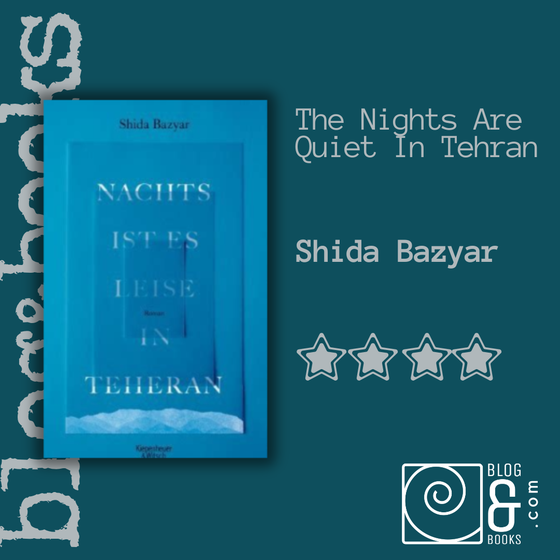
Shida Bazyar's Booker Prize-nominated novel is a multigenerational story about exile, identity and political upheaval that shows the weight of history on a single family.
The novel spans four decades, from the Iranian Revolution in 1979 to the Green Revolution in 2009, with each section narrated by a different member of the Navabi family. The first part is told from Behzad's point-of-view. He's a young communist revolutionary who hopes to change Iran's future after the Shah is expelled. But as the brutal reality of the Mullah regime comes crashing down, Bahzad, Nahid and their two small children are forced to flee Iran, finding exile in West Germany.
A decade later and Nahid takes over the story. Her depression is raw and relatable as she struggles to embrace her new life, culture and the new language which lacks the poetic melody of her native Farsi.
In 1999, Laleh, Nahid and Behzad's eldest daughter returns with her mother to Iran for a holiday. The Tehran she remembers clashes with the reality of a city which has been profoundly transformed by repression and state violence, forcing Laleh to confront her parents sacrifices.
It's now 2009 and this part of the story is told from Mo, Laleh's brother's, point-of-view. Mo is more interested in drinking and hanging out with his friends at University than politics. Then the Green Revolution breaks out in Iran following the contested re-election of Ahmadinejad, and the social media videos and posts he watches awaken something in him.
The final part of the novel is set at an unspecified time in the future and is told from the youngest child's viewpoint. Tara, unlike Mo and Laleh, was born in Germany. Her section hints at the cyclical nature of resistance and the possibility of change.
Bazyar doesn't romanticise Iran or Germany. The novel is as much about the family's life in exile as it is about the homeland they had to leave behind. Behzad and Nahid's first years in Germany are marked by hardship, low-paying jobs, language barriers and the constant fear of being recognised by other regime-friendly Iranians. Although their children are raised in Germany, they are marked as outsiders, with their brown skin and foreign names. Laleh's frustration at being her parents' interpreters will probably resonante with many readers from immigrant backgrounds.
This is an immersive story that perfectly balances political history with intimate, human moments, making the Navabi family's journey feel both universal and personal. This is a thought-provoking novel, which left me wishing for a little more resolution, but I will still be thinking about it for a while to come and will definitely recommend it to people.
Posted 01.06.2026


Oh hey there!
I'm Louise, but you can call me Fatty. I really like to read, and then I really like to tell people about what I've read. I started this book blog to give fellow readers some great recommendations and maybe introduce them to a writer or a genre that maybe they wouldn't have discovered on their own - because that's what reading is all about!
