Palestine: Peace Not Apartheid
Jimmy Carter
non-fiction | politics | middle east | palestine | israel | world politics
First published 2006
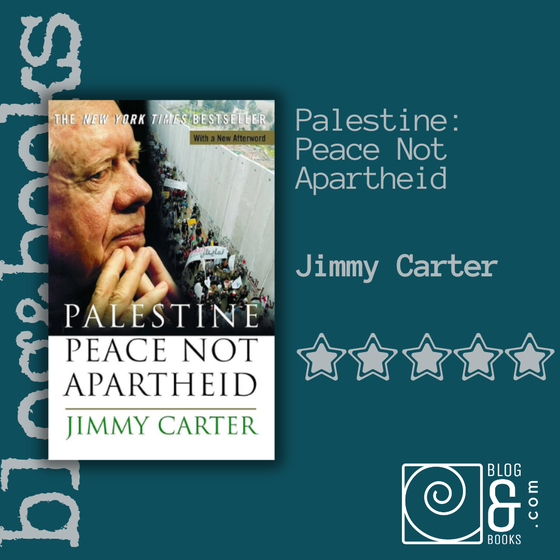
It’s rare to read a book about politics and history that feels so urgent. Jimmy Carter doesn’t just write about the Israeli-Palestinian conflict, he writes about the cost of peace that's been deferred, the weight of silence, and the complicity of those who look away. Originally published in 2006, this is a book that could have been written yesterday. It's a haunting reminder of how little has changed and how much has been lost.
At its heart, Palestine: Peace Not Apartheid is about the people caught in the machinery of occupation and war. Carter, with his unique perspective as a former president, doesn’t just lay out facts and figures, he makes you feel the stakes. He writes about the families divided by walls, the children growing up in the shadow of checkpoints, the farmers watching their land slip away. He doesn’t shy away from calling Israel’s policies what they are (apartheid), and he doesn’t let the U.S. off the hook for its role in enabling the status quo.
What makes this book so powerful is Carter’s refusal to sugarcoat the truth. He doesn’t offer easy answers or false hope. Instead, he asks hard questions: What does it mean to be a superpower and turn a blind eye to injustice? What does it cost to prioritize political expediency over human dignity? And perhaps most urgently, what happens when a nation is allowed to act with impunity, year after year, decade after decade?
The most chilling moment comes near the end, when Carter quotes a warning that if Israel continues unchecked, it will become the greatest threat to global peace. Reading those words in 2026, with the ongoing genocide in Gaza and the invasion of Iran, it really feels like a punch in the stomach. This book serves as a reminder that history isn’t just something we read about, it’s something we’re living inside, and we’re all responsible for how it unfolds.
Posted 22.04.2026


Oh hey there!
I'm Louise, but you can call me Fatty. I really like to read, and then I really like to tell people about what I've read. I started this book blog to give fellow readers some great recommendations and maybe introduce them to a writer or a genre that maybe they wouldn't have discovered on their own - because that's what reading is all about!
